

In our fast-paced world, the home should serve as more than just a place to sleep—it should be a dedicated space for restoration. When I designed "The Art of Zen Living," my mission wasn't just to build a house, but to architect an atmosphere of stillness.
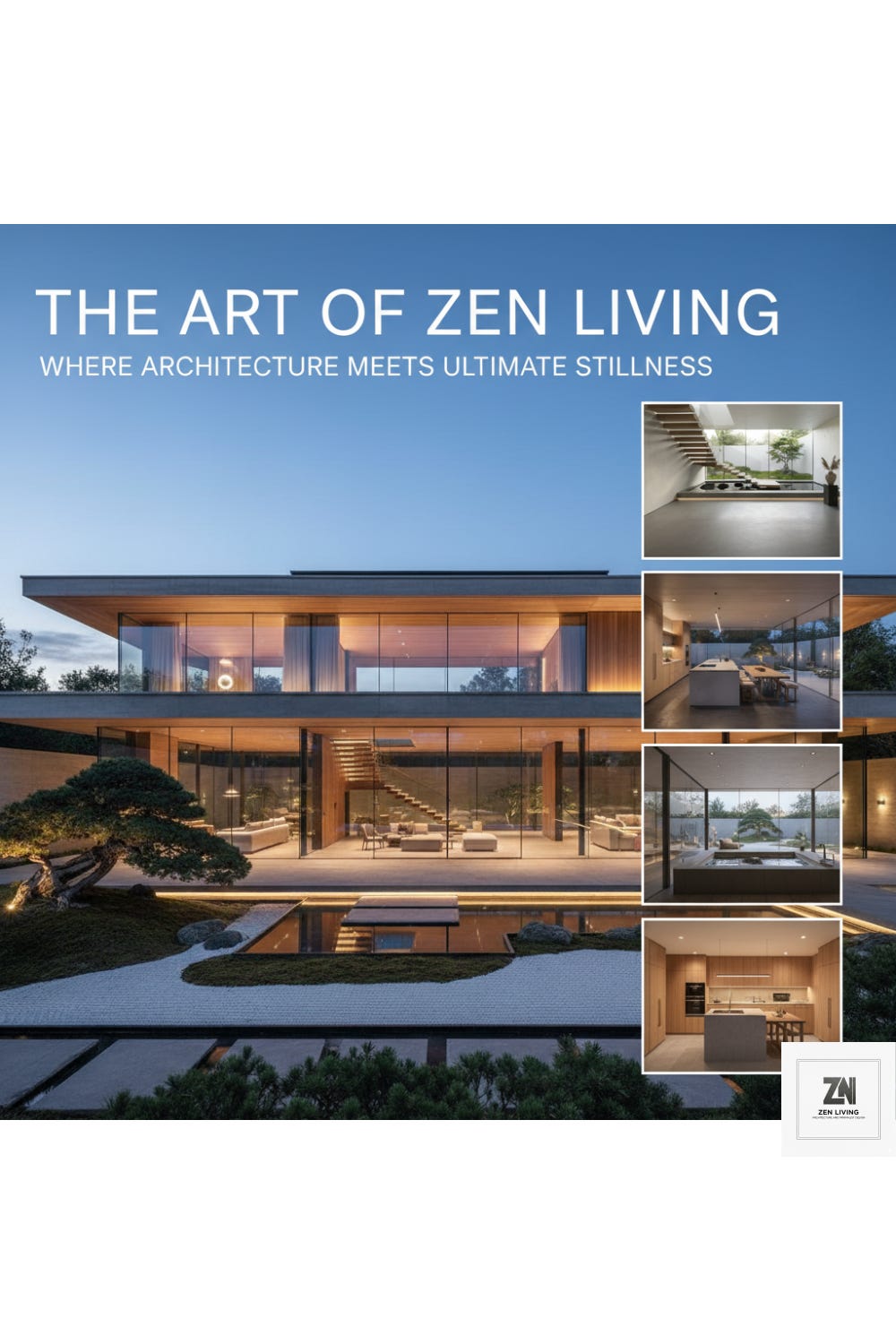
The Mindful Layout: Where Flow Meets Function
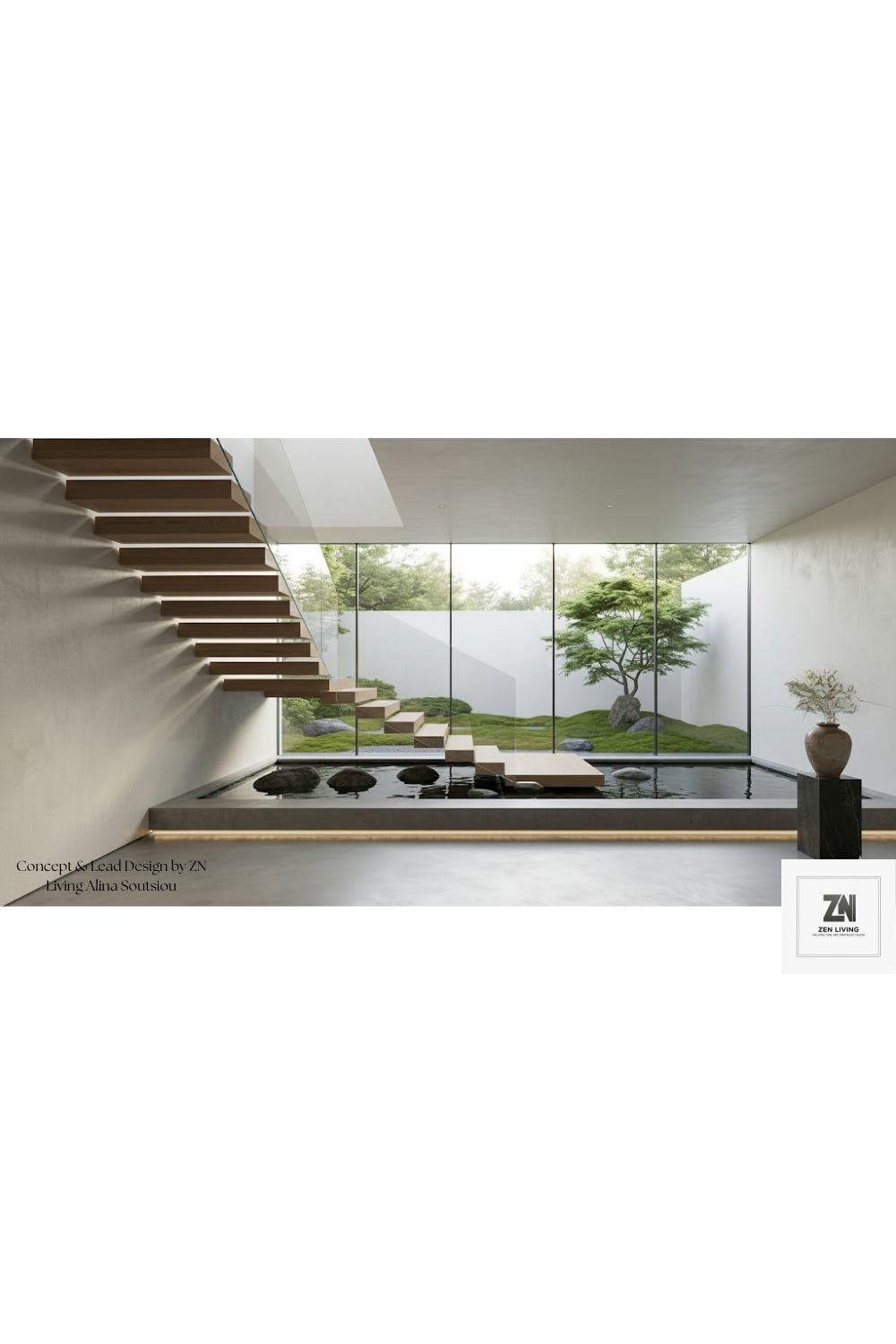
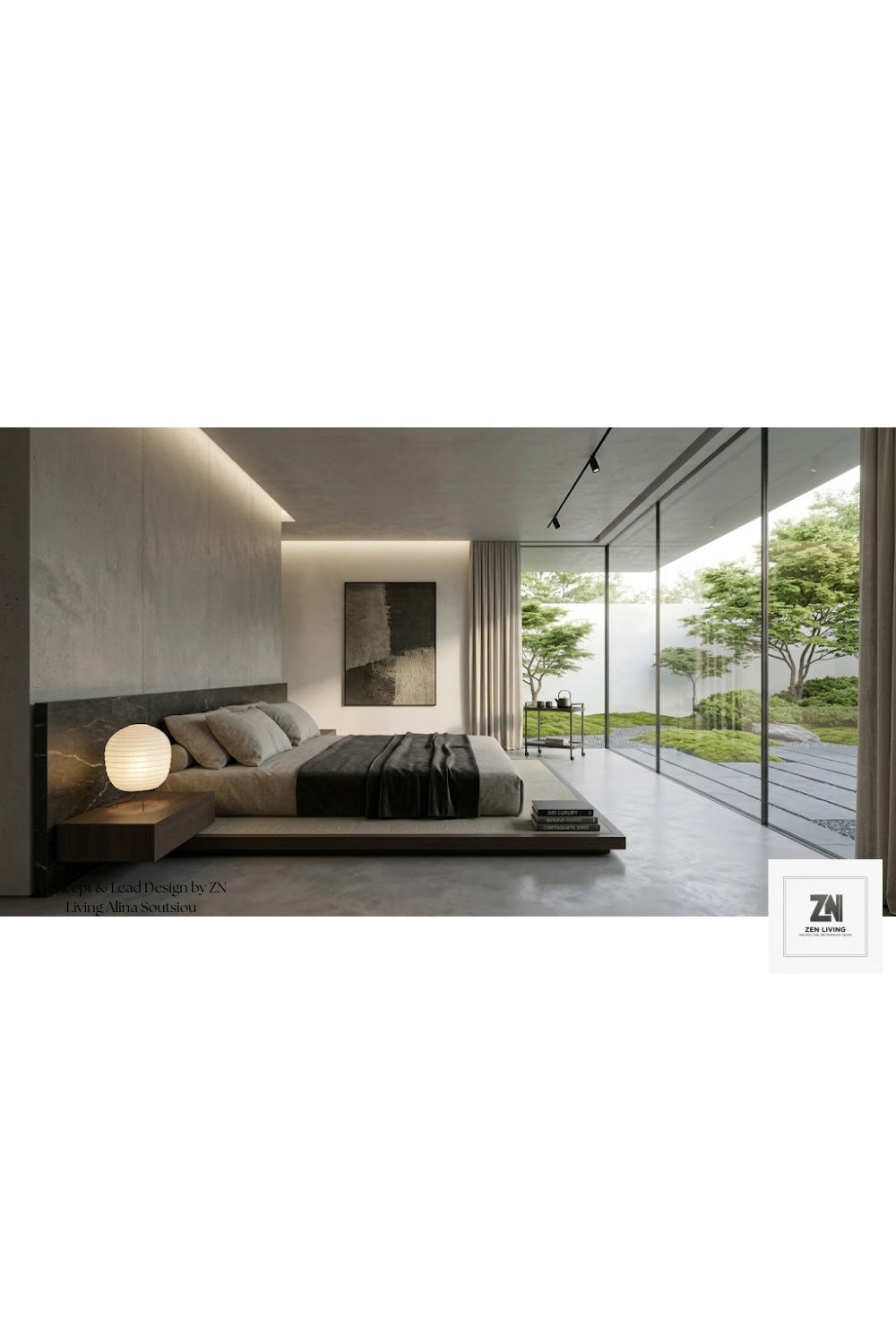
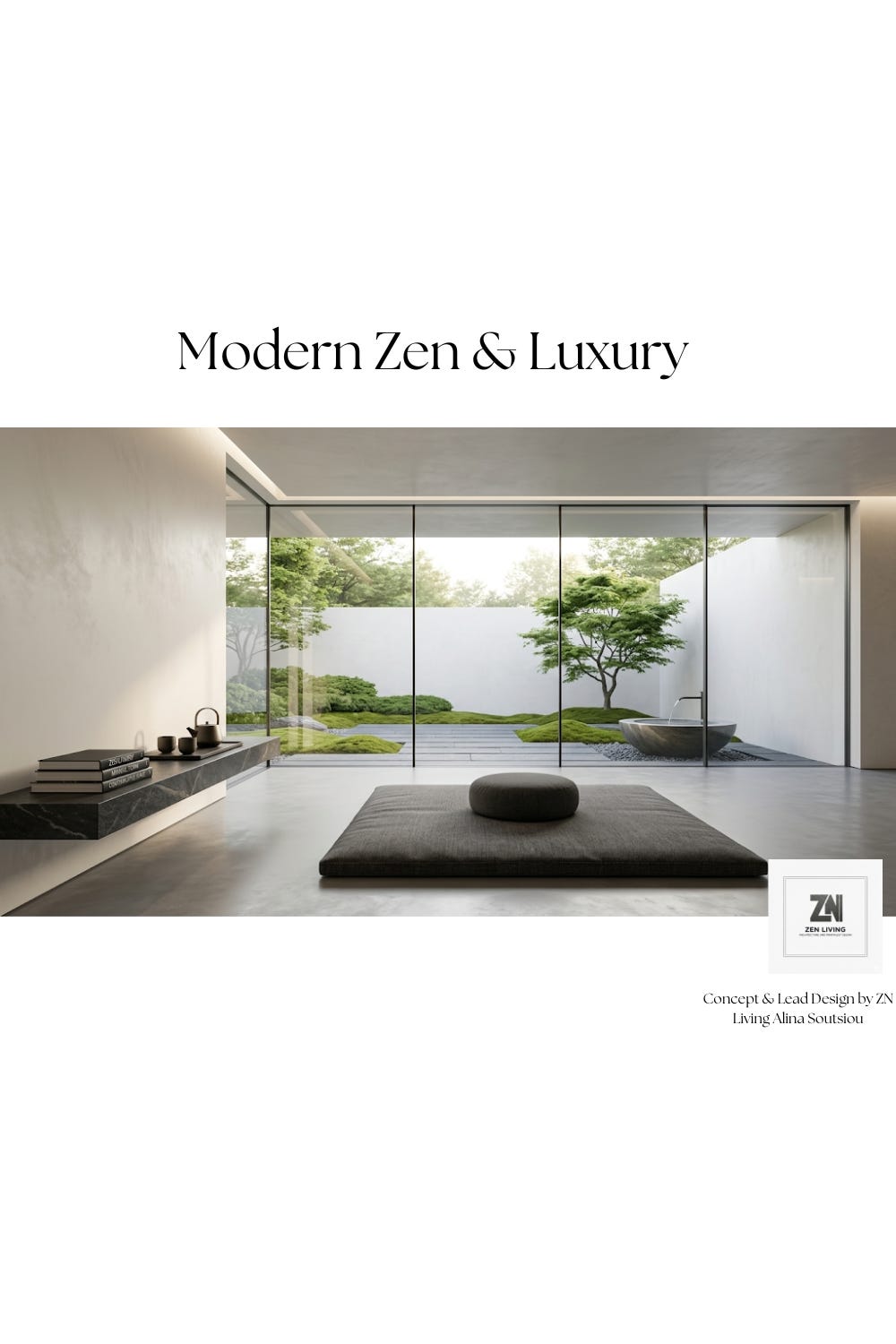
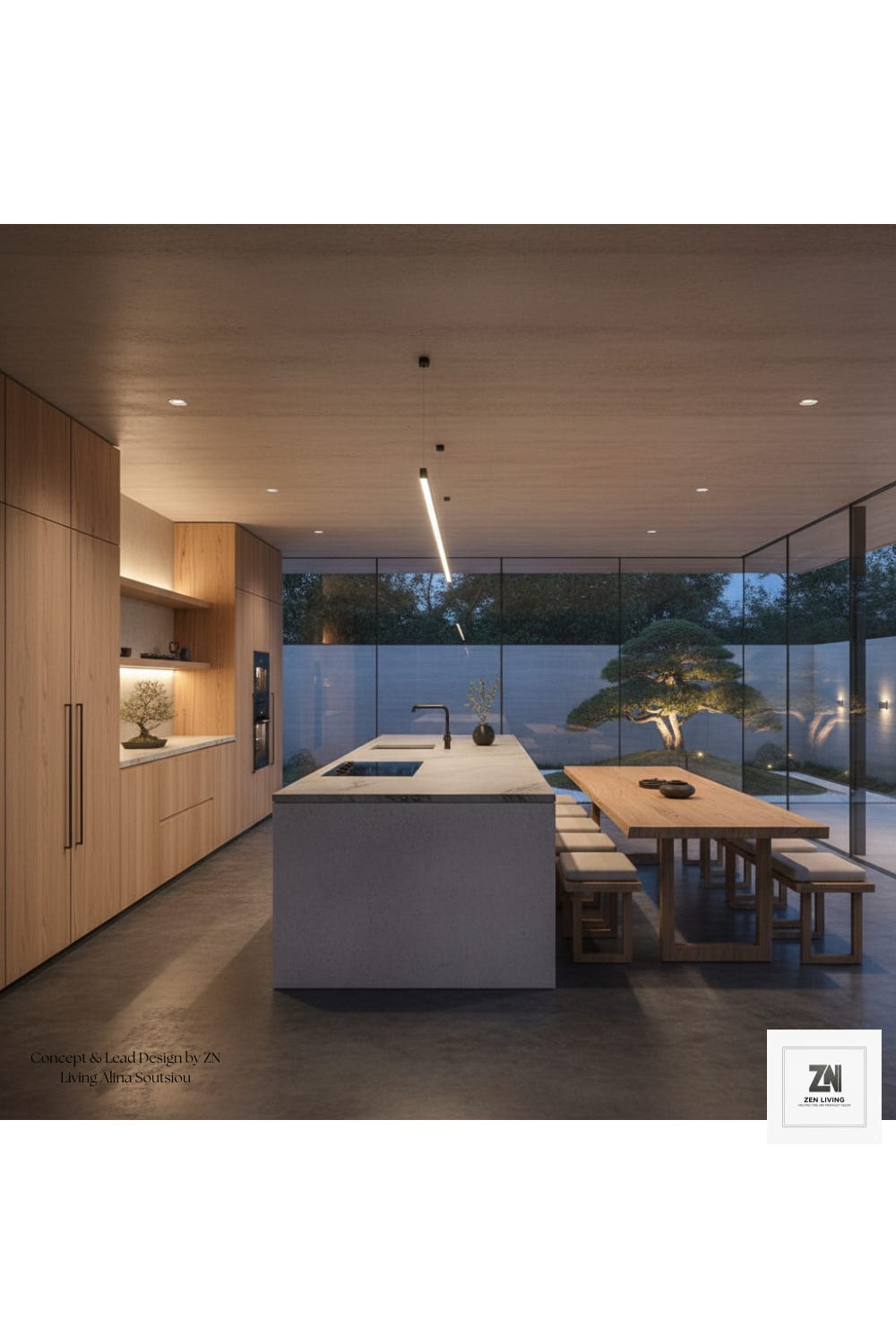
True Zen design begins with the removal of visual noise. By utilizing a minimalist palette—raw microcement, warm white oak, and honed stone—we create a "neutral canvas" that calms the nervous system. The architectural flow is intentional; from the floating staircase that feels suspended in mid-air to the expansive, uninterrupted glass walls, every transition is designed to encourage slow movement and introspection.
Biophilic Design: The Healing Power of Nature
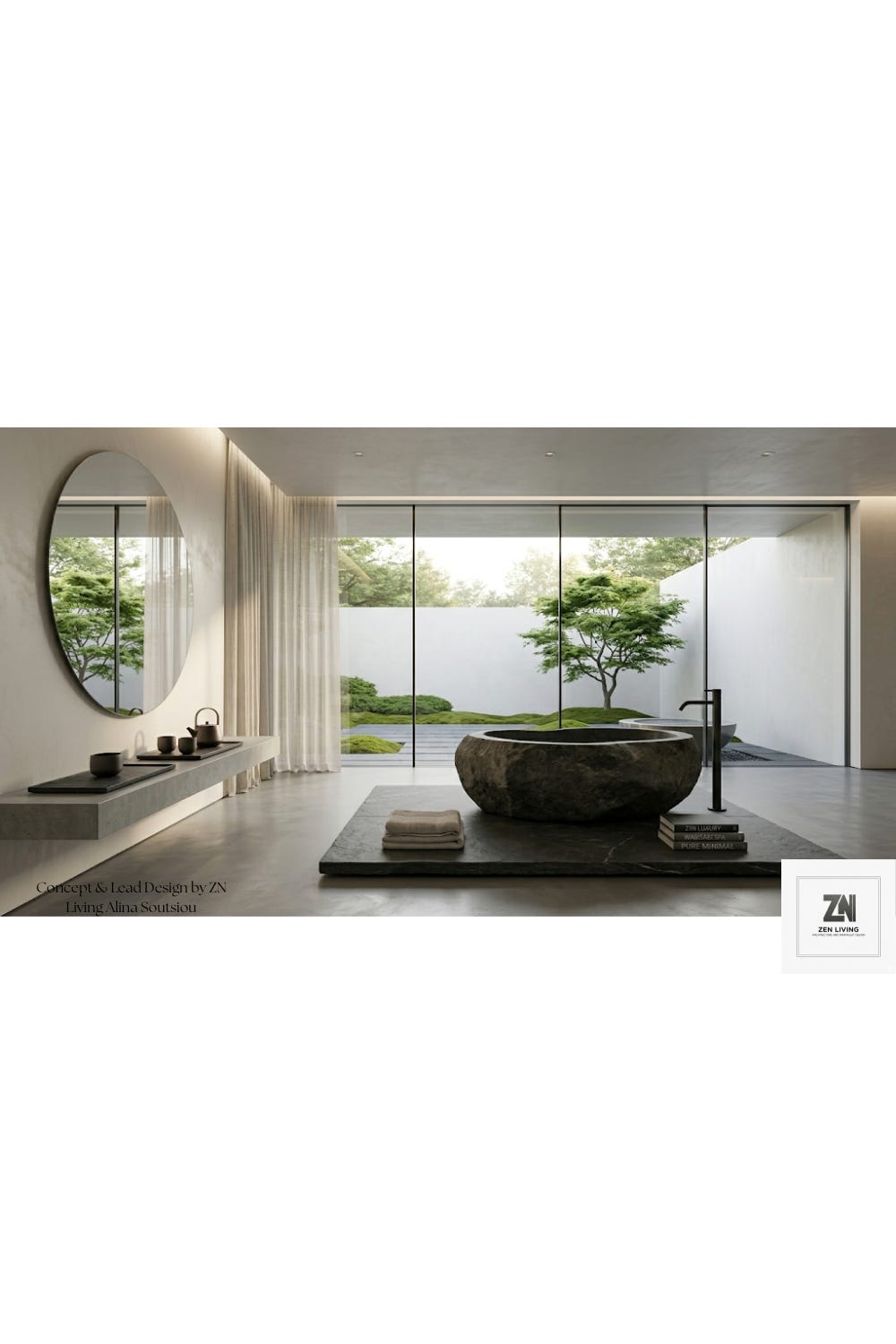
The true luxury of "The Art of Zen Living" lies in its integration with the outdoors. By blurring the line between the interior and the private moss garden, we invite the therapeutic effects of nature inside. Whether you are working in the living area or moving through the hallway, the presence of water, light, and greenery acts as a natural stabilizer, reducing stress and enhancing focus.
Designing for the Senses
Luxury in this project isn't about ornate decor; it’s about sensory quality.
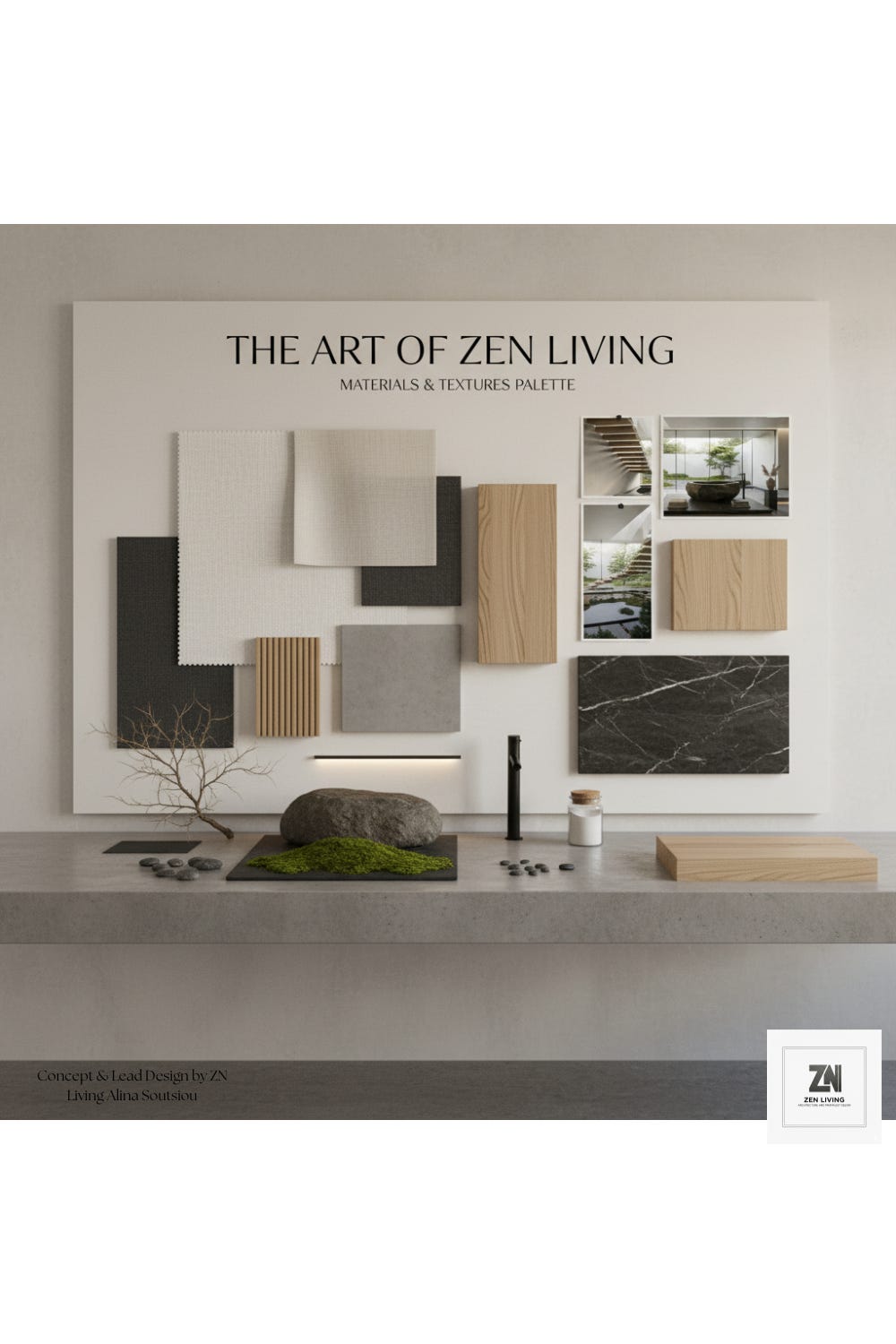
Tactile Materials: The roughness of stone against the smoothness of wood provides a grounding sensory experience.
Ambient Lighting: We avoided harsh overheads, opting for soft, indirect lighting that mimics the circadian rhythm, helping you wind down as the sun sets.
Spatial Silence: By emphasizing open, uncluttered floor plans, we allow the house to 'breathe,' giving your mind the space it needs to switch off.
"The Art of Zen Living" proves that when we design for stillness, we aren't just creating a home; we are creating a better way to live. How does your current living space support your wellbeing?
Sometimes, the most luxurious thing you can do is clear the space and let the light in.